When Should You Schedule a Sewer Camera Inspection?
You should schedule a sewer camera inspection when you notice slow drains, recurring backups, or sewage smells around your property—or before those problems start. A camera inspection is the clearest way to see what's actually happening inside your sewer line without digging up your yard. It tells you whether you're dealing with a small blockage, root intrusion, cracks, or something worse, so you can make a real decision instead of guessing.
Most homeowners wait until there's a crisis. We get called when sewage is already backing up into the front yard or the basement. That's the expensive moment. The smarter move is to catch issues early, when your options are cheaper and less disruptive.
What a Sewer Camera Inspection Actually Shows
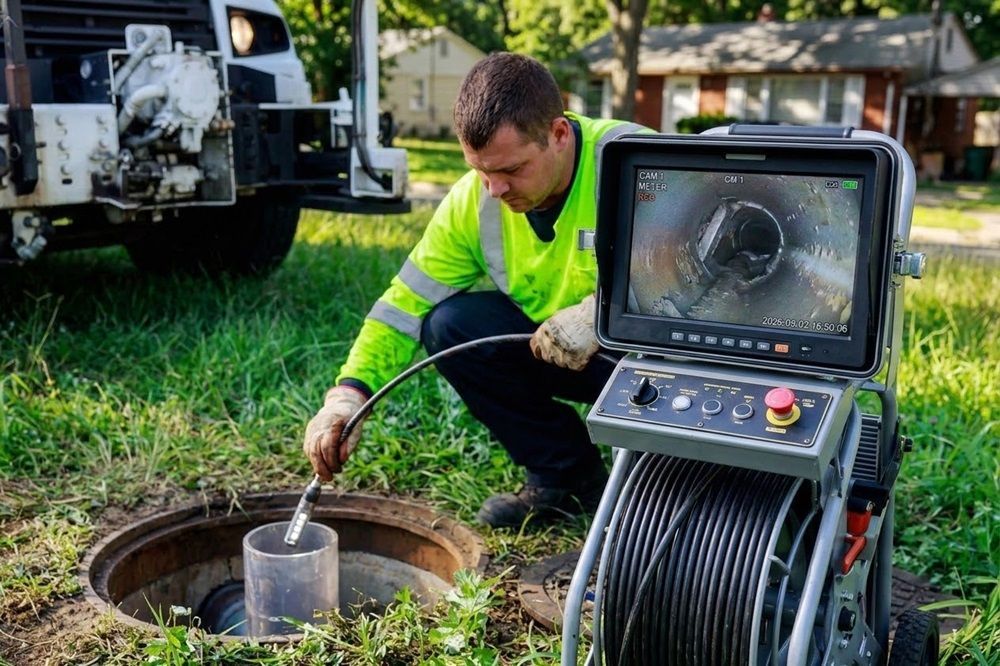
A sewer camera inspection is straightforward: a small, waterproof camera on a flexible cable gets fed down into your sewer line. The technician watches the live feed on a monitor and records what they see. You get to see it too.
The camera reveals things you can't know any other way:
- Blockages — grease buildup, debris, or foreign objects stuck in the line
- Root intrusion — tree roots have found their way into cracks and are growing inside the pipe
- Cracks or breaks — the pipe itself is damaged and letting sewage leak into the ground or allowing soil to collapse inward
- Pipe deterioration — older clay, cast iron, or concrete pipes breaking down from age
- Bellies or low spots — sections of pipe that have sagged, trapping water and solids
Once you know what's there, you know what needs to happen next. Maybe it's a simple drain cleaning to clear the blockage. Maybe it's sewer line repair or replacement. Maybe it's nothing urgent yet, but you'll monitor it. The camera removes the guesswork.
The Warning Signs That Mean Schedule One Now
You don't need to wait for the worst-case scenario. Several problems point clearly toward needing an inspection:
- Frequent backups or slow drains — one slow toilet might be nothing; multiple slow drains or recurring backups suggest something's wrong in the main line
- Sewage smell near your home — inside or outside, this signals a backup or break
- Wet spots or unusually green patches in your yard — sewage leaking underground
- Multiple drains backing up at once — a sure sign the problem is past your fixtures, in the main sewer line
- Gurgling sounds from drains — air trapped in the line, usually because something's blocking it
- Recent heavy rain followed by backup — your line might be cracked or have bellies that can't handle the volume
If you're seeing warning signs you need sewer line repair, a camera inspection is the logical next step. It confirms whether the main line is the culprit.
When to Inspect Even If There Are No Problems Yet
Not every inspection is an emergency response. Preventive inspections make sense in these situations:
You're buying or selling a home. A sewer line issue is expensive and it's going to affect the sale either way. Get an inspection before you buy—it reveals hidden problems. If you're selling, a clean inspection report is a strong selling point.
Your home is older and you've never had the line inspected. Homes built before the 1980s often have clay or cast-iron pipes that fail with age. If you don't know what you've got, an inspection tells you how much time you probably have before major work becomes necessary.
You've had recent work done in your yard. Digging for landscaping, construction, or utility work sometimes damages sewer lines. An inspection afterward confirms you're still in the clear.
Tree roots are a known problem in your neighborhood. If you've got mature trees and your neighbors have dealt with root intrusion, you're at risk too. Tree roots can damage sewer lines, and an inspection spots it early.
You're considering a major remodel or addition. Before you invest in a kitchen or bathroom renovation, know whether the sewer line can handle it. An inspection answers that question.
How Often Should You Get One?
There's no universal schedule. It depends on your line's age and condition.
For most homes in decent shape: Every 3–5 years is reasonable preventive care if you want peace of mind. You're catching small problems before they become big ones.
For older homes or homes with known issues: Every 1–2 years makes sense, especially if you've had repairs done. You want to track whether the fix is holding or if something new is developing.
After major repairs: Get a follow-up inspection within a few months to confirm the work solved the problem and didn't create new ones.
If you've never had one: Get one soon. You're flying blind otherwise. It's the single best investment you can make in understanding the condition of your underground infrastructure.
We recommend being proactive here. Most people don't think about their sewer line until it fails. The ones who do—who get an inspection every few years—spend less money overall because they catch and fix small problems instead of waiting for catastrophic failure.
What Happens After the Inspection
Once the camera has done its job, you'll get a full report. Good operators—including those at Mako —will show you the video, walk you through what they found, and give you clear recommendations.
If there are issues, you'll know your actual options:
- Blockage: Clear it with hydrojetting or snaking.
- Minor cracks or root damage: Depending on severity, trenchless repair might work—no digging required.
- Severe damage or complete failure: Full sewer line replacement is the real fix.
The cost of the inspection itself is typically a few hundred dollars—and that investment saves you thousands by catching problems early. It's also knowledge you can use when talking to contractors about repairs.
What to Look for in a Camera Inspection Company
Not all inspections are equal. The quality depends on the equipment and the person running it.
You want someone who:
- Uses modern, high-resolution camera equipment that captures clear detail
- Provides a recorded video of the full inspection that you can review
- Gives written findings—not just verbal—with specific locations and descriptions of problems
- Explains what they found in plain language, not jargon
- Doesn't try to oversell repairs you don't actually need
- Is fully licensed and insured
- Has experience with your type of line and your neighborhood's common issues
The person operating the camera matters as much as the equipment. An inexperienced technician might miss something. A rushed inspection is worthless.
Ready to Get Clarity on Your Sewer Line?
A sewer camera inspection is one of the most useful tools available for understanding what's really happening underground. Instead of wondering, worrying, or waiting for a backup to strike, you get facts. Facts let you make smart decisions about money and timing.
Whether you're dealing with warning signs now or you're being proactive, an inspection is a straightforward, non-invasive way to protect your home and your wallet. When you're ready to schedule one,
get in touch with our team, and we'll help you understand exactly what your sewer line needs.
FAQ
How long does a sewer camera inspection take?
Most inspections take 1–2 hours depending on the length of your sewer line and how accessible the cleanout is. If there's heavy buildup blocking the line, it might take longer because the camera can't get through until the blockage is cleared.
Do you have to dig to do a sewer camera inspection?
No. The camera is fed down through an existing cleanout, usually a pipe or access point in your yard or basement. If there's no accessible cleanout, technicians can sometimes create a temporary opening, but actual digging isn't part of the inspection process itself.
Will a camera inspection damage my sewer line?
Not if it's done properly. The camera cable is flexible and non-invasive. The risk comes from pushing the camera through a severely blocked line—that's why a good technician will clear obvious blockages first or know when not to push.
Can a sewer camera inspection find all problems?
A camera will show you cracks, breaks, root intrusion, blockages, and most structural issues. It won't detect problems that are completely beyond the scope of the main line (like issues at a septic tank or in branching lines that aren't part of the main sewer). It's also limited to what's visible inside the pipe—external soil conditions that might affect the line can't be seen on camera alone.
How much does a sewer camera inspection cost?
Most sewer camera inspections in Sacramento are priced competitively as a standalone service. Some contractors include it free when you schedule a repair. The cost is worth it compared to the price of discovering a major problem too late.
What should I do if the inspection finds a problem?
Once you know what the problem is, get estimates from reputable contractors for the repair. You'll be able to ask specific questions because you've seen what's actually wrong. Don't assume you need the most expensive fix—sometimes a simpler solution will handle it.
You might also like